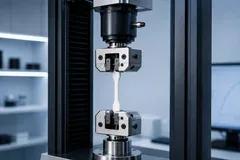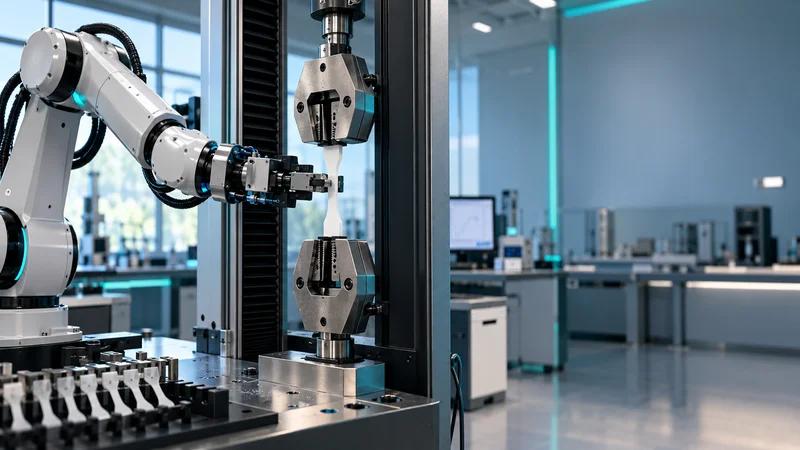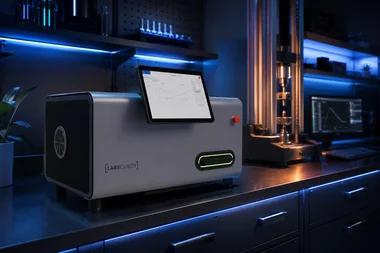

Same lab. Same material. Same workflow. Different results. It is a familiar challenge for plastics testing laboratories: why can repeated tests on the same material produce different results, even when technicians follow established procedures?
In the LabsCubed webinar The Hidden Cost of Manual Plastics Testing, Khaled Boqaileh, LabsCubed's CEO, explored the sources of variation in tensile testing, the operational costs of manual workflows, and how integrated automation can help laboratories improve consistency while making better use of their testing capacity.
The discussion focused on an important distinction: improving a testing machine is not the same as automating the entire testing workflow.
Where does testing variation begin?
A tensile test involves more than applying force to a specimen. Results depend on a sequence of steps, from specimen measurement and positioning to gripping, testing, deformation measurement, analysis, and reporting. Each step introduces opportunities for variation.
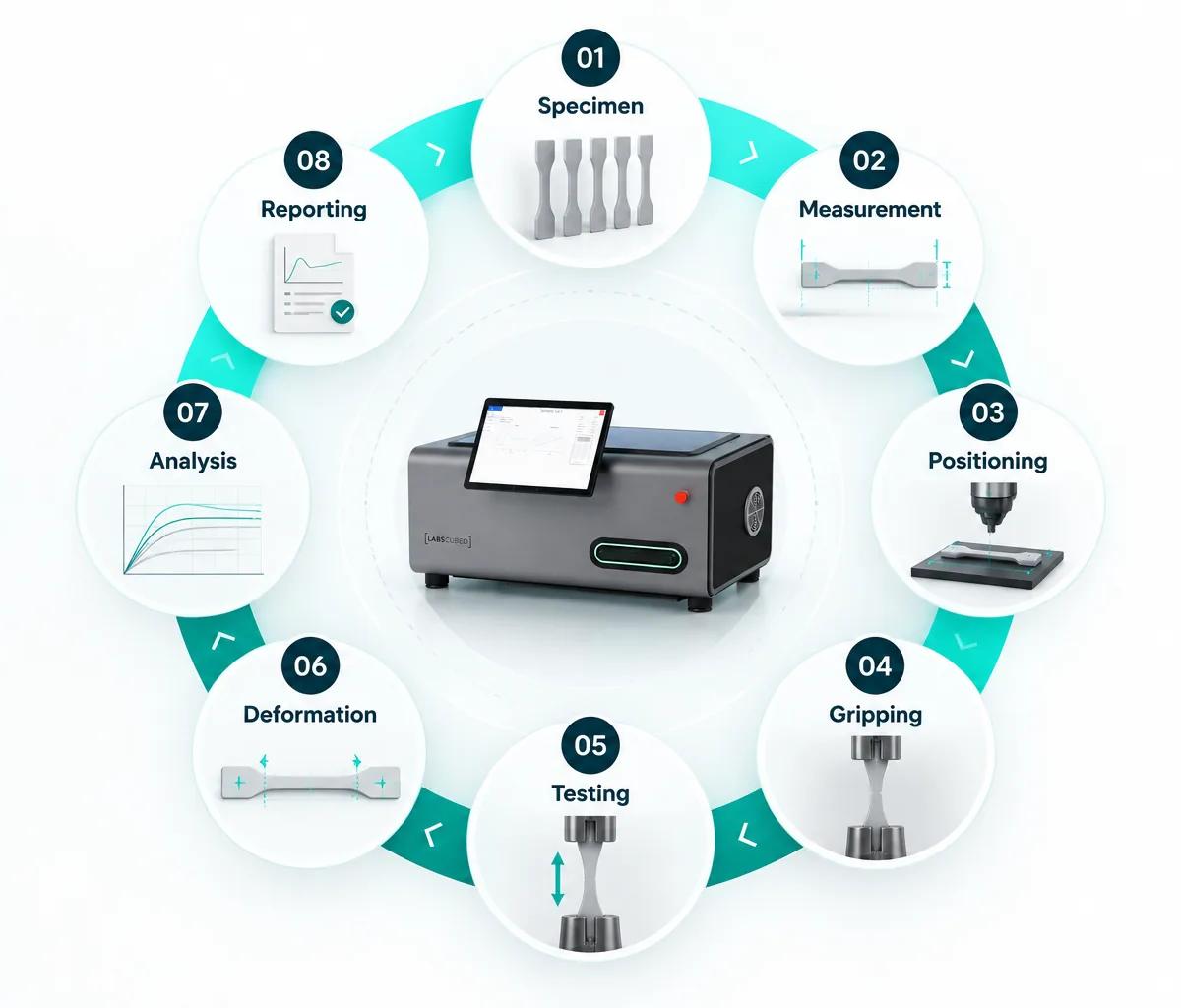
In the webinar, Boqaileh examined several sources of variation, including:
- Specimen dimensions — small differences in width or thickness affect calculated stress and other reported properties.
- Environmental conditions — temperature, humidity, and specimen conditioning can influence material behavior, particularly for moisture-sensitive polymers.
- Machine performance and setup — calibration, crosshead speed, and test configuration all contribute to the measurement process.
- Gripping and alignment — slippage, excessive grip pressure, or misalignment can influence the observed response and the location of specimen failure.
- Deformation measurement — gauge length and extensometer placement matter, particularly when calculating modulus from small changes in specimen length.
- Human execution — manual positioning, measurement, judgment, and data entry introduce additional opportunities for differences.
- Analysis and reporting — data processing, curve interpretation, calculations, and transcription can affect the final reported result.
The presentation illustrated how these effects can accumulate. For example, an error in specimen thickness affects the cross-sectional area used to calculate stress. A gripping or alignment issue may influence the test itself, while a transcription error can alter a result after the physical test has finished.
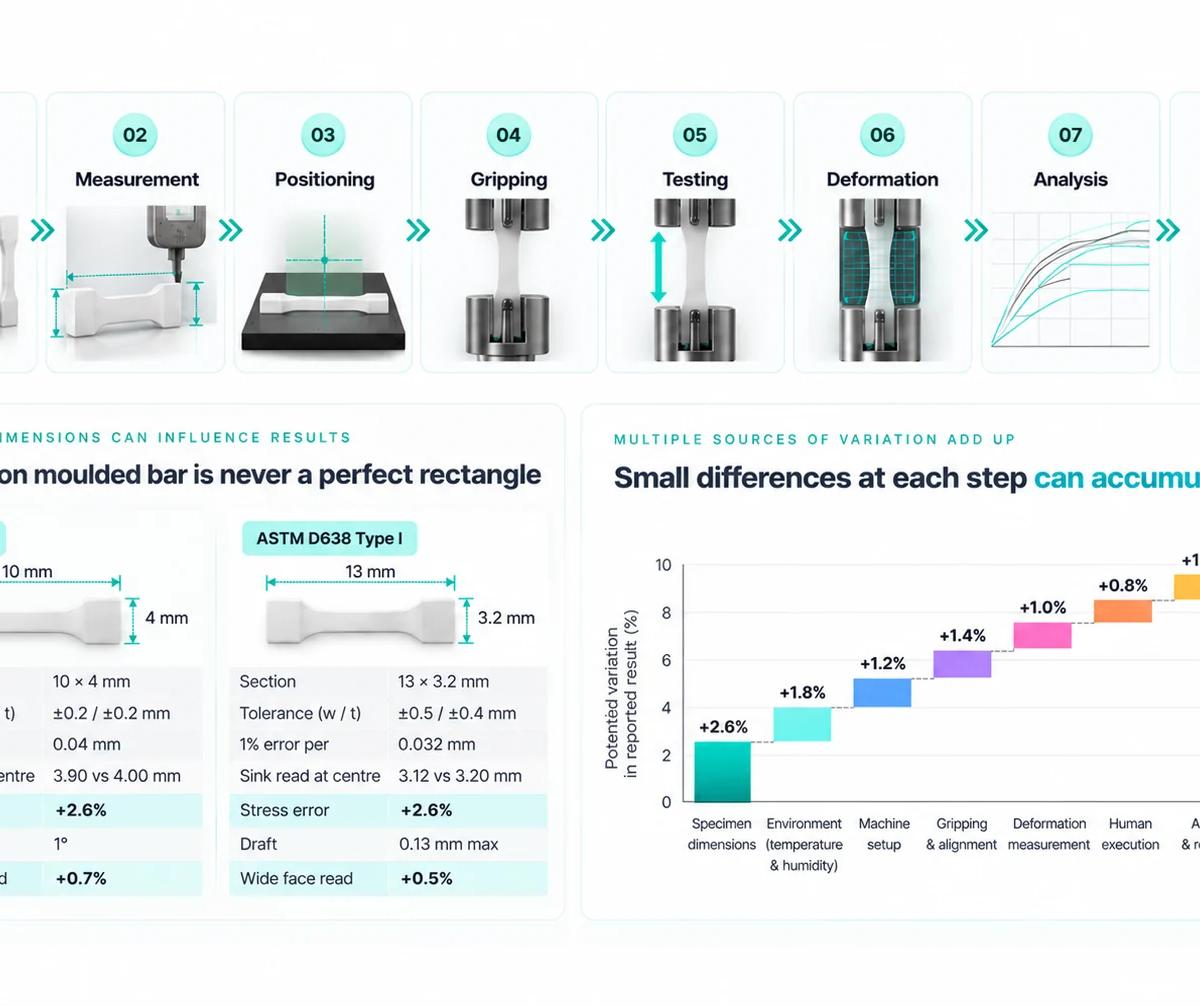
These examples demonstrate why repeatability cannot be considered solely a property of the testing frame. It depends on the broader measurement process.
Why following a standard may not eliminate variation
Standards provide essential procedures and requirements for conducting comparable tests. The webinar discussed ISO 527 and ASTM D638, including their requirements for specimen dimensions, conditioning, test configuration, and measurement. However, following a standard does not automatically eliminate every source of variation.
Some steps still require practical execution and judgment. Technicians must measure specimens at appropriate locations, position them correctly, select suitable gripping conditions, assess whether a failure is valid, and ensure that results are processed and recorded correctly.
The presentation also highlighted the sensitivity of modulus measurements to small dimensional and deformation-measurement differences. Its illustrative calculations showed how several relatively small errors could combine into a more substantial difference in a reported property. These calculations were presented as examples of potential error accumulation, rather than as a universal prediction of the variation a laboratory will experience.
For laboratory managers and quality teams, the implication is practical: calibration and standard operating procedures remain necessary, but reviewing the complete testing workflow is also important when investigating inconsistent results.
The operational cost of manual testing
Variation is only one part of the challenge. Manual testing also requires technicians to perform repetitive tasks throughout the process. Measuring specimens, loading them into grips, configuring tests, handling data, and preparing reports all consume time. Retests can add further work when specimens slip, fail at the grips, or produce results that need investigation.
These demands affect laboratory capacity as well as measurement consistency. Time spent on routine handling and data processing is time that cannot be allocated to other testing, analysis, or laboratory priorities.
The webinar outlined several established practices for reducing variation:
- Standardizing specimen preparation
- Calibrating and maintaining equipment
- Controlling environmental conditions
- Ensuring consistent positioning
- Following standardized procedures
- Minimizing operator-dependent differences
- Monitoring repeatability and reproducibility
The next question was whether more of this process could be automated.
From an automated machine to an automated testing workflow
A central theme of the webinar was the difference between an automated machine and an automated testing workflow. Partial automation can remove selected repetitive tasks while leaving the technician responsible for much of the process. Integrated automation takes a broader approach, designing specimen handling, testing, data collection, analysis, and reporting to work together.
This is the approach presented by LabsCubed with CubeTen. Rather than treating automation as an additional component around a conventional testing machine, CubeTen is designed around the testing workflow. The webinar demonstrated a process in which the technician loads a tray, selects the test method, and reviews the results while the system carries out the automated testing sequence.
The presentation also covered software capabilities for collecting testing data, saving test video, reviewing results, and supporting integration with laboratory information systems.
The intended benefit is to reduce reliance on repeated manual intervention across the workflow — not to remove the technician's role in preparing specimens, selecting appropriate methods, or reviewing the results.
What the repeatability data shows
The webinar included an example of ten polypropylene specimens tested using CubeTen, with stress–strain curves and summary statistics presented for multiple material properties. The presentation also reported coefficients of variation for other properties, including tensile strength, break stress, and modulus.
coefficient of variation for break strain
Ten polypropylene specimens tested on CubeTen, mean break strain 295.45%. An example from one material and one configuration, not a guarantee for every application.
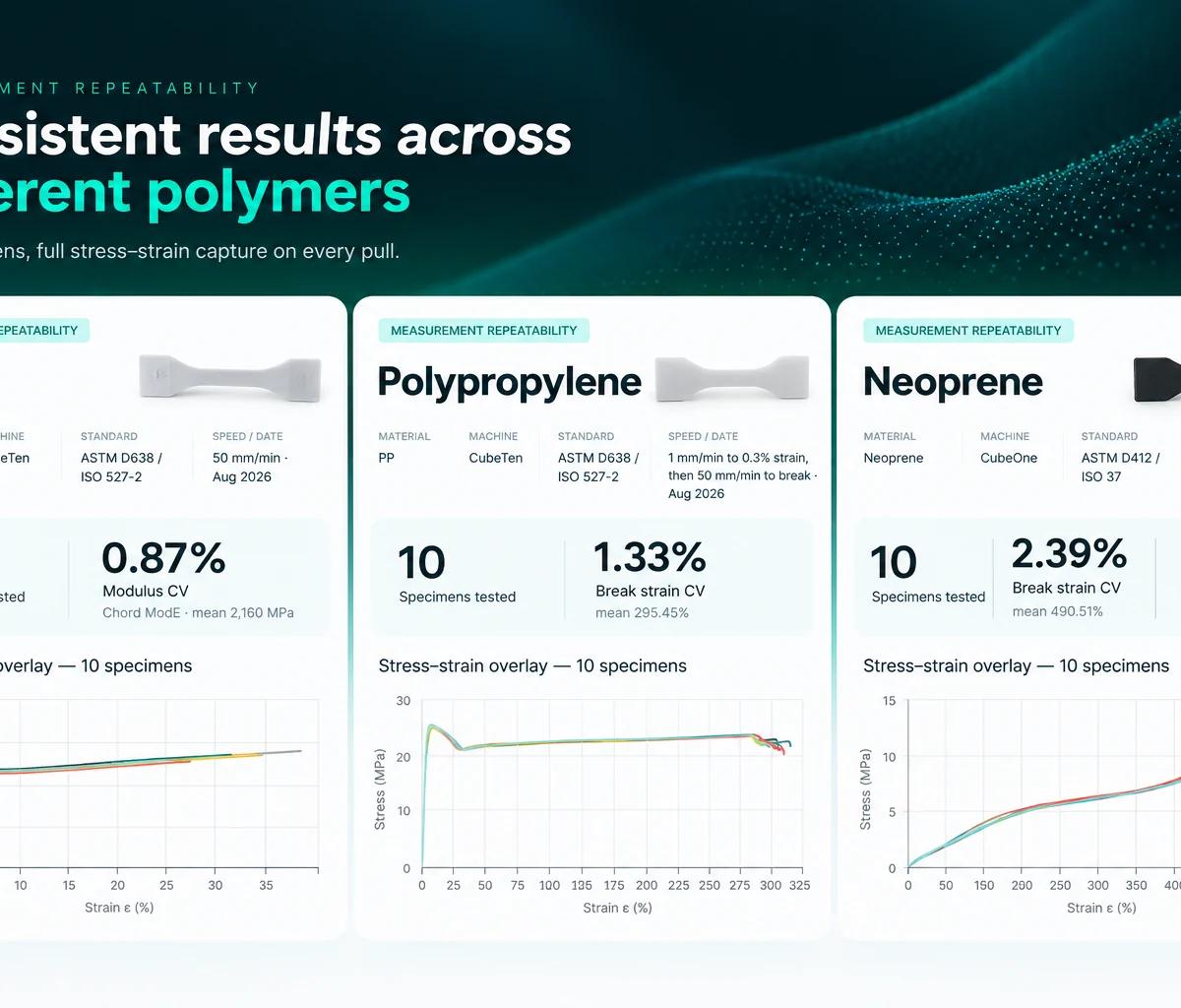
These figures provide a concrete example of how repeated test results can be examined as a group rather than assessed only one specimen at a time. They should be interpreted within the context of the specimens, material, test configuration, and conditions represented in the presentation. Results from a single example do not establish that every material or testing application will achieve the same variation.
The deck also presented broader benefit figures for consistency, time savings, and return on investment. Because the supporting methodology and assumptions are not detailed in the presentation itself, laboratories should evaluate those figures against their own testing volumes, labor requirements, and technical needs.
Integrating automation into an existing laboratory
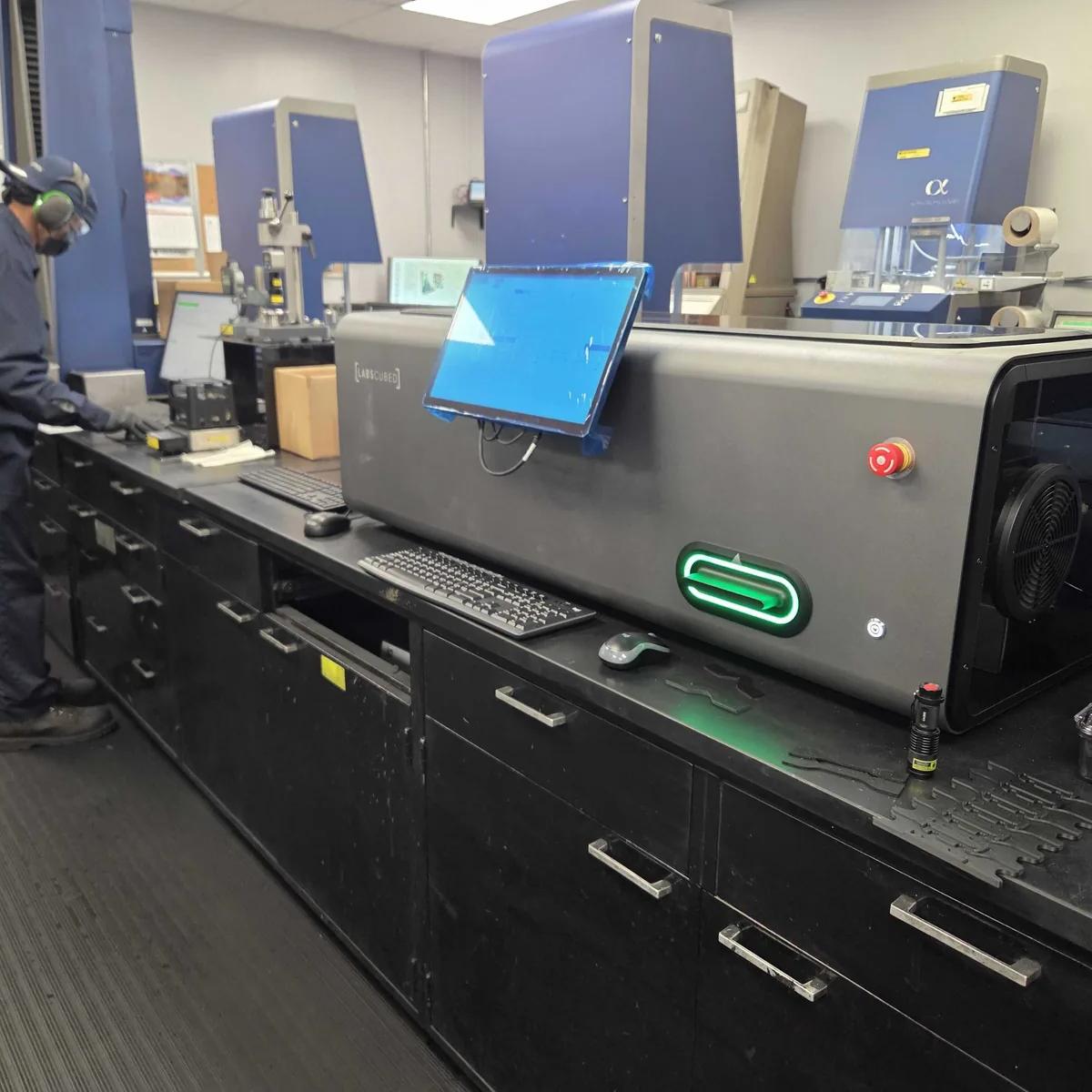
Automation also needs to fit the laboratory in which it will operate. The webinar discussed CubeTen's compact integrated design, software, standards support, and potential connections to existing laboratory systems. The presentation listed supported testing methods and specimen configurations, alongside options for data collection and integration.
For laboratories considering automation, the relevant questions extend beyond machine specifications:
- How much technician time is spent on each testing workflow?
- Which manual steps contribute most to variation or retesting?
- How much testing capacity is constrained by repetitive work?
- Which standards, specimen types, and test configurations must be supported?
- How will testing data and results fit into the laboratory's existing systems?
Answering these questions helps establish whether automation is technically suitable and where it could deliver the greatest operational value.
Explore the full webinar
The LabsCubed webinar The Hidden Cost of Manual Plastics Testing examines the sources of testing variation, the hidden operational costs of manual workflows, and the role of integrated automation in tensile testing. Watch the full recording to explore the technical discussion, see CubeTen demonstrated, and review the data presented during the session.
Watch the full webinar replay
Hear the technical discussion, see CubeTen demonstrated, and review the data presented during the session.
If your laboratory is evaluating automation, LabsCubed can also discuss a Tensile Testing Automation Assessment or a customized CubeTen demonstration based on your workflow, testing requirements, and laboratory priorities.
Get a free full lab assessment
Book your lab evaluation: we will review your workflow, testing requirements, and laboratory priorities.